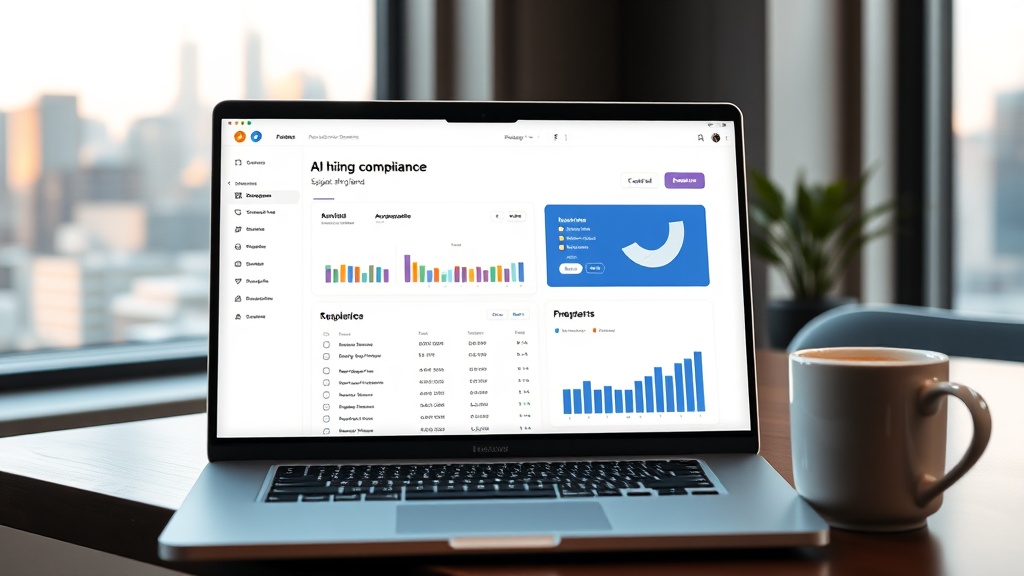
AI Hiring Regulations 2026: What Job‑Seekers and Employers Must Know

Hook: Imagine you’re interviewing for a tech job and the recruiter asks, “Did an AI system score your resume?” In 2026, that question isn’t hypothetical—it’s becoming mandatory in several states.
Context: Over the past year, a wave of state‑level AI‑in‑employment laws has hit the headlines. Colorado, California, and Illinois have all enacted “high‑risk” AI regulations that force companies to disclose, audit, and sometimes even pause automated hiring tools. For job seekers, the new rules could mean more transparency. For employers, they spell a compliance headache.
What New AI Hiring Laws Took Effect in 2026?
Three states have rolled out the most consequential statutes so far:
- Colorado Artificial Intelligence Act (CAIA) – effective July 2026. The law classifies any AI system used for hiring, promotion, or termination as “high risk.” Employers must conduct a bias impact assessment, post a public notice of AI usage, and keep audit logs for at least three years. Lexology details the framework.
- California Consumer Privacy Act (CCPA) amendment – effective May 2026. The amendment adds an “AI‑Hiring Transparency” provision requiring businesses to provide candidates with a plain‑language description of any automated decision‑making, the data used, and the logic behind it. Consultils breaks down the notice requirements.
- Illinois Artificial Employment Decision‑Tool (AEDT) Act – effective March 2026. Similar to Colorado, Illinois mandates an independent third‑party audit of any AI hiring tool before deployment and annual recertification. Akerman LLP provides the compliance checklist.
How Do These Regulations Affect Job Seekers?
For candidates, the biggest win is visibility. Companies must now:
- Tell you whether an AI system evaluated your application.
- Explain, in plain language, how the system works (no legal jargon).
- Give you an opportunity to request a human review.
That means you can ask follow‑up questions like “What data points were considered?” and you’ll get a concrete answer instead of a vague “Our process is automated.” It also opens the door for you to challenge a decision if you suspect bias.
What Do Employers Need to Do Right Now?
Compliance isn’t optional—non‑compliant firms face fines up to $10,000 per violation per day, plus potential class‑action lawsuits. Here’s a quick‑start checklist:
- Audit every AI hiring tool. Document model version, data sources, and intended use.
- Run a bias impact assessment. Use a third‑party auditor or an internal team with diverse representation.
- Publish a transparent notice. Place it on your careers page and include it in job postings.
- Maintain audit logs. Capture who accessed the system, when, and what outputs were generated.
- Set up a human‑in‑the‑loop (HITL) process. Allow candidates to request a manual review within 14 days of an AI decision.
For a deeper dive into building a compliance workflow, check out my earlier post on how AI is reshaping tech careers. The same principles of transparency apply.
Which Industries Are Feeling the Heat?
Tech, finance, and healthcare were early adopters of AI screening, so they’re now under the microscope. But even niche sectors—like logistics firms using AI for driver‑routing assignments—must comply if they use any automated decision‑making for hiring.
Will Federal Legislation Change the Landscape?
Experts predict a federal AI‑in‑employment bill by late 2026 or early 2027 that would harmonize state rules. Until then, companies operating in multiple states must treat the strictest state (currently Colorado) as the baseline.
Takeaway: What Should You Do Next?
Job seekers: When you see a job posting, look for the AI‑usage notice. If it’s missing, ask the recruiter. Keep a record of any AI‑related communications—they could be useful if you need to challenge a decision.
Employers: Start the audit now. The compliance timeline is tight, and the penalties are steep. A simple spreadsheet tracking each tool, its purpose, and its audit status can save you weeks of frantic last‑minute work.
Stay tuned—next week I’ll interview a compliance officer at a mid‑size tech firm about how they’re navigating the new Colorado rules.
Related Reading
- AI Prompt Engineer Salary 2026: Earnings & How to Land the Role — See how the new regulations are inflating demand (and pay) for AI talent.
- 7 Emerging Remote Jobs in 2026 You Can Start Today — Some of these roles will now require AI‑compliant hiring pipelines.
- How Tech Workers Actually Pivoted After Layoffs — Learn how AI tools can both help and hurt career pivots.