What It's Actually Like to Be a 911 Dispatcher: One Night in the Call Queue
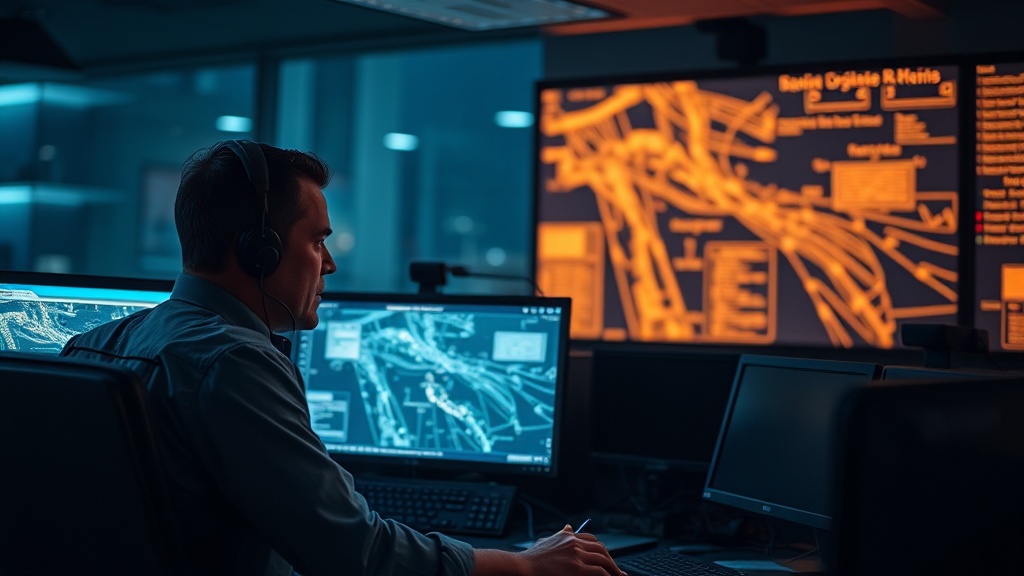
At 7:08 p.m. on a Tuesday, the lights in Unit 4 were already red on every console.
That is how a night usually starts in a public safety answering point.
You don’t step into a dramatic film scene. You sit down, put on your headset, log into three screens, and wait for one stranger to call with something they can’t carry alone.
Most people think dispatching is “answering calls.” My last feature was about people who changed industries. Tonight’s profile is about people who keep those industries running while nobody is looking.
I spent two shifts with Maya (name changed), a public safety telecommunicator in the Pacific Northwest. Her paycheck says she’s an operator. Her job says she’s half coordinator, half paramedic, half crisis counselor, and, when the system is busy, all of those at once.
The Setup Before the First Call
When Maya signed in for a 7 p.m. shift, she did five things in under six minutes:
- checked her radio encryption keys,
- synced the computer-aided dispatch map,
- ran a mock text-to-dispatch test,
- confirmed her crew roster and ambulance staging map,
- and verified her seat-height so she could avoid neck pain by shift three.
“People think this is just sitting at a desk and listening,” she said. “It starts with this exact ten-minute ritual. If the rig screens are wrong and the map lags, we can lose minutes. In this job, minutes are a kind of currency.”
According to the U.S. Bureau of Labor Statistics, this work category is officially called public safety telecommunicators and includes 9-1-1 operators and fire dispatchers.
The BLS says there were 105,200 jobs in 2024 and the median annual wage is $50,730.
The same page says the top 10% make around $78,110 while the bottom 10% are under $35,640.
So this isn’t a glamorous “high salary, low risk” profession. It’s a stability-and-stress profession.
A Normal Night Isn’t Very Normal
By 7:21 p.m., Maya was already reading her first active card. A neighbor had found a car in a ditch with smoke, no injuries, no evacuation, no official emergency classification yet.
She did not ask for details first. She grabbed the caller’s exact location, whether anyone was trapped, and who had keys to a flashlight and emergency contacts.
Then she patched fire command, then police traffic.
The entire exchange took 45 seconds.
No one heard her hands shaking.
“Don’t panic the system,” she said, not the caller.
No one ever hears the rest.
What the Desk Actually Does (the part people miss)
The OOH section from BLS breaks this into a simple line: answer calls, send responders, track status.
In practice, the work is longer:
- collecting a location when the caller can’t get a full sentence out,
- translating fragmented panic into usable coordinates,
- deciding whether the nearest unit is three blocks or thirty minutes away,
- telling people how to start CPR while a unit is still on the way,
- logging every update so a handoff doesn’t drop.
Maya put it this way:
“I’m not just forwarding a phone call. I’m building the first draft of the scene while the caller is still standing in it.”
That sentence is the job in one line.
The Busiest Minute Is Usually the Quietest One
This part sounds impossible until you’ve seen the logs.
For most of her shift, Maya listens while dispatchers elsewhere on the floor talk through calls. But the desk is full of anticipatory work:
- updating units,
- cleaning duplicates,
- flagging calls with incomplete addresses,
- and preparing to re-route units when a road closes.
“People think action only starts at ‘call received,’” she said. “Most of the time, action starts at ‘the call didn’t tell me everything but I still have to make a call now.’”
This is where burnout starts, not after one bad call but after dozens of tiny decisions where nobody says ‘thank you.’
The 12-Hour Rule
Maya’s shift is not the old “9 to 5” world.
Most dispatchers are scheduled for 8 to 12-hour shifts, and many work evenings, weekends, and holidays. That means her week often looks like 7 p.m. to 7 a.m., day off, day off, then another overnight.
“Your body thinks your calendar is broken,” she said. “Then after a few weeks you stop asking it to be normal.”
Night work also changes the emotional weather.
At 2:11 a.m., there are fewer requests for “assistance with a tire problem” and more calls for “my partner is not breathing right,” “there’s a guy in the parking structure crying,” and “help, he won’t stop screaming.”
Maya has to stay on tempo after each one:
- one hand on CAD (computer-aided dispatch),
- one hand on radio,
- eyes on map,
- and a mental checklist for caller coaching.
You can hear it in her voice if you know what to listen for.
She doesn’t shout. She does not speed up for drama. She does something subtler:
“Breathe with me. Say what I’m about to say exactly once.”
Then she gives instructions.
I asked her once if she ever feels detached.
She said no. “If you get detached in this room, you can’t do the job.”
But she also told me she carries those calls home in two ways she hates:
- as a checklist in her head,
- as guilt when she gets back and can’t sleep immediately.
The Gaps Are Real
Publicly, dispatchers are associated with adrenaline peaks.
Privately, most of the work is waiting. It is waiting for confirmation, waiting for a unit to update, waiting for a caller to provide an address, waiting for the system to stop timing out.
No one in the room says “I’m bored.”
What they say is “the hard part is the gaps.”
That sentence came up twice during our ride-along.
The gap after a call is when your hands are technically idle and your mind is doing an invisible audit.
“Was that location right? Did I pass the right unit? Was there a second person in the room? Did they mention a med allergy?”
It’s mental load stacked like an old spreadsheet with no totals row.
No one has a script for the silence between emergencies.
The Learning Curve
BLS says most telecommunicators need a high school diploma, on-the-job training, and often state certification. In some places, that training is as short as a few months; in others it can run longer with continuing education.
Maya’s county has a local rule-of-thumb she hates repeating:
“If you can’t type fast in the first two weeks, you’re behind.”
Typing isn’t desk work trivia. It is triage speed.
She showed me two test screens from her training:
- a map with half a dozen false GPS tags,
- a stack of simulated cardiac-arrest scripts with one missing field,
- a language-translation drill where the caller only says one thing three times through panic.
She still takes notes by hand for her own sanity.
The official line is “train and certify.”
The lived reality is train, certify, train again, and then start over at full volume.
What She Makes, and What She Doesn’t See as Make
Maya’s direct number is steady. Her story is not the one headline people want.
Public Safety Telecommunicators have median pay around $50,730/year nationwide in BLS May 2024 data. In local public-sector settings, many start lower with modest overtime and move up with longevity, certification, and assignments.
The same BLS data says the bottom 10% are below $35,640 and the top 10% above $78,110.
That range matters.
It tells you this profession is more “wide lane to narrow lane” than “easy path.”
When people ask if she regrets the money, Maya says this exactly:
“I don’t lie and say it’s all worth it financially. I say it’s not as bad as people think, if they stop pretending the role is simple.”
She had this to add, looking at her own log sheet:
“I used to think pay was the measure. Now I know predictability matters too. I know my next shift starts on a schedule. I know I’m doing hard, necessary work. I don’t have to explain that every day.”
The Part No One Writes About: Being the Calm in Someone Else’s Panic
This is the hardest paragraph to write honestly.
The stories you don’t read are not the ones without emergency calls.
They are the ones where the call is still in progress when the caller hangs up because they finally know what to do.
Maya spends as much time coaching as dispatching:
- “Get away from the engine compartment.”
- “If they’re not breathing, put them on their side.”
- “Don’t move the injured person unless you have to.”
In training videos, those instructions look like checklists.
At 3:18 a.m., they are three seconds of human trust.
She said the part she can’t describe in interviews is this:
“Someone on the line says, ‘I’m sorry,’ and I have to answer, ‘You don’t need to apologize. Give me the next thing I can use.’”
A minute later she may be in the same breath telling police to clear a street and advise a parent that EMS is en route.
One desk, two lives in one queue.
What Her Best Day Looks Like
Here’s what a better day looks like from Maya’s perspective:
- the map is clean,
- crews are available,
- the caller is coherent,
- no one has had to be redirected by wrong address,
- and her break at 2:30 a.m. lasts more than six minutes.
She smiled when she said this because it feels like winning.
“People imagine disaster is when things go bad,” she said. “For me, a good shift is when nothing fails.”
That’s not how TV writes a life.
But it’s how this job pays for itself.
Is the Job for Everyone?
No.
Not everyone can stay calm while processing fear at speed.
Not everyone can sit with the fact that someone may thank them 20 minutes later for getting the right information, then call for the same person again because the second crisis is worse.
Not everyone can afford to work rotating schedules or accept the emotional aftershocks that come with it.
Maya’s own decision rule is simple and practical:
- Can you remain useful under pressure?
- Can you handle the paperwork with one hand while your brain handles the emergency with the other?
- Can you keep saying “I’m here” without pretending you’re not scared?
She used all three before she joined.
The Trade-Off Behind the Headset
There’s a reason we keep telling career stories about pivots.
People leave jobs for better titles, higher pay, cleaner routines.
But some people stay in a job not because the pay is high, but because the stakes are undeniable and visible every night.
Maya does not frame her work as heroism.
She told me this: “I’m not trying to save everyone. I’m trying to make sure the right person gets there with the right information, right now.”
That is still a bigger claim than most workplaces ask: helping someone survive long enough for someone else to arrive.
If there’s a clean lesson here, it is this: not every “career path” is a ladder. Sometimes it is a relay. Sometimes your whole contribution happens in the first three minutes. And that is still a real career.
Method Notes and Sources
I confirmed details from BLS Occupational Outlook Handbook for public safety telecommunicators (data as of August 2025 update, with 2024 wage and outlook figures). In short:
- Job title group: Public Safety Telecommunicators (SOC 43-5031)
- 2024 median wage: $50,730/year
- Jobs in 2024: 105,200
- Projected 2024–34 growth: 3% (about 10,700 openings a year)
- Typical shifts: full time, often 8- to 12-hour, often outside business hours
If you’re considering this work, I also checked state and local requirements with interview sources and agency postings because certification and scheduling rules vary by county.
Maya’s full name and employer details are protected at her request. What you have in this piece is the real operational structure of the job and the actual pressure points I observed on shift.
Have a job shift story of your own? Email marcus@careerstories.blog.